











Return to the Shack: What Readers, Reviewers, and Theologians Have to Say
A closer look at Wm. Paul Young's controversial sequel to The Shack
Nearly twenty years after The Shack became an international publishing phenomenon, Wm. Paul Young has returned with a sequel that's already making bestseller lists and stirring conversations about faith, forgiveness, and the nature of God.
Published October 6, 2026, Return to the Shack debuted at No. 9 on the New York Times Hardcover Fiction bestseller list. But does it live up to the original? And what do Christian reviewers and everyday readers think about this long-awaited sequel?
We've gathered professional reviews, reader reactions, and important content considerations to help you decide whether Return to the Shack deserves a place on your reading list.
Available at christianbooks.today
Nearly twenty years of faith and controversy ...
Originally self-published in 2007, The Shack began as a personal gift for Young's children before becoming an extraordinary word-of-mouth success. The novel eventually sold more than 25 million copies worldwide, was translated into 41 languages, and inspired a major motion picture in 2017.
Its story of a grieving father encountering representations of the Trinity touched millions of readers, but also generated theological controversy. Some Christians embraced its imaginative portrayal of God's love, while others challenged Young's depiction of the Trinity and his interpretation of traditional Christian doctrines.
Nearly two decades later, Young returned to Mackenzie Phillips's story. The sequel became an instant New York Times bestseller, demonstrating that interest in The Shack remains strong.
What is The Shack's sequel about?
Ten years have passed since Mack's extraordinary encounter with God. Although his understanding of forgiveness has changed, his family continues to struggle with the consequences of his daughter Missy's murder.
His wife, Nan, carries her own grief, and their marriage has suffered under the weight of their shared tragedy.
Then, on what would have been Missy's sixteenth birthday, Mack receives an unimaginable request: visit the prison where the man responsible for his daughter's death is awaiting execution.
What follows is an emotionally challenging exploration of forgiveness, justice, and whether even someone who has committed terrible crimes can experience redemption.
Inspired partly by Young's real-life friendships with death row prisoners, the sequel moves beyond the original novel's extraordinary spiritual encounter to examine how forgiveness works in the painful realities of everyday life.
Praise and endorsements for Return to the Shack
Return to the Shack has attracted enthusiastic praise from prominent authors, Christian leaders, and public figures, many of whom appreciate its emotional depth and exploration of forgiveness, trauma, and redemption.
Shelf Awareness praises the novel as “Marvelous." They go on to say that "Young's brilliantly crafted drama will captivate readers with its spiritually profound message of forgiveness as a form of salvation.”
Bear Grylls, adventurer and author of The Greatest Story Ever Told, calls Return to the Shack “one of the great soul adventures of our age,” while Brian Zahnd, pastor and author of Unseen Existences, describes the novel as “a gripping novel and a triumph of theological imagination.”
Former Archbishop of Canterbury Rowan Williams calls Young's novel a "haunting and brave book." He says that Return to the Shack “explores what it means to believe that the most impossible hopes of mercy and new creation might turn out to be possible on the far side of the worst violence and the deepest tragedy.”
Looking at the earliest reader reviews, fans who loved The Shack were eager to return to Mack's story and appreciated the sequel's emotional depth, particularly its treatment of grief, forgiveness, and the difficulty of moving forward after tragedy.
Some describe the sequel as equally powerful as the original, while others appreciate its quieter, more reflective approach. Several readers mention being moved to tears or finding themselves thinking about the book long after finishing it.
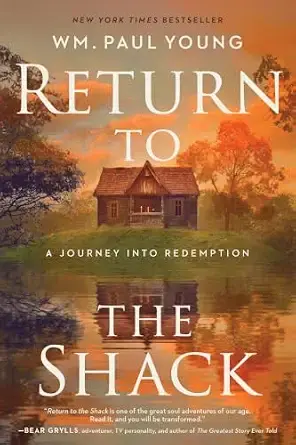
Return to the Shack by Wm. Paul Young
Publisher's Description:
Ten years after the devastating events of The Shack, Mackenzie Allen Phillips is still living in the shadow of loss. Though life has moved forward, grief continues to haunt his family, his relationships, his faith, and his very sense of self.
Nan, his wife, carries her own hidden sorrow. They are two people bound together by love yet often divided by pain. On what would have been their daughter Missy's sixteenth birthday, Mack and Nan confront the unthinkable when Mack is asked to visit death row to speak with the serial killer who abducted and murdered her.
In the stark silence of the prison, Mack encounters not only the brokenness of another human being but also the raw weight of his own anger, doubt, and disappointment with God. Where is God when unbearable suffering endures? How can a shattered heart ever heal?
In Return to the Shack, William Paul Young invites readers on a profound journey into the depths of grief, the complexity of trauma, and the surprising humanity of those we most fear. With honesty and compassion, he explores the devastating impact of mental illness, abuse, and violence, the strain of loss on relationships, and the staggering cost—and unexpected freedom—of forgiveness.
What do critics have against Return to the Shack?
Just like its predecessor, not all Christian readers are enthusiastic about Young's new release. Some readers prefer the original novel's emotional impact, while others question the author's theological interpretations, especially ideas concerning salvation and universal reconciliation.
Critical reviewers have offered varied assessments, raising questions about the book's pacing, literary execution, and theology. A few also mention profanity or language they found objectionable in Christian fiction.
Giles Gough, writing for Premier Christianity, appreciates Young's compassionate portrayal of God and the novel's memorable dialogue. However, Gough also criticizes the book's slow pacing, lengthy logistical conversations, and characters whose voices sometimes sound too similar.
Readers hoping for a tightly plotted, fast-moving sequel may find these aspects less satisfying.
The sequel also revisits theological questions that made the original novel controversial. Reviewers raise concerns about Young's treatment of salvation, judgment, and reconciliation, particularly ideas that may suggest the possibility of redemption beyond death.
Available at christianbooks.today
Is the theology in Return to the Shack heretical?
As with the original The Shack, Young's portrayal of God and salvation has also sparked theological controversy. Particularly concerning to some Christian reviewers are the novel's suggestions about judgment, hell, and the possibility that everyone may eventually be reconciled to God, even after death.
Paul Marchbanks, writing for Christianity Today, identifies several “provocative, unorthodox ideas,” including a purgatory-like experience that may extend beyond death and a depiction of hell he describes as “universalist-adjacent.”
Janie B. Cheaney of WORLD is more critical, describing the sequel as a story of forgiveness with “broken theology.” She particularly objects to the suggestion that everyone will eventually be reconciled to God, arguing that Young's approach conflicts with traditional Christian teachings about sin, judgment, and salvation.
These concerns reflect a significant theological disagreement. Traditional evangelical teaching emphasizes the necessity of repentance and faith in Christ during one's earthly life, while universalism holds that all people will ultimately be reconciled to God.
Some readers find Young's imaginative exploration of divine mercy deeply encouraging. Others believe his portrayal risks minimizing the seriousness of sin and contradicting biblical teachings about judgment.
Does Return to the Shack include a trigger warning?
Return to the Shack does not include a formal trigger or content warning on its official book pages or cover. However, the novel explores several emotionally intense and potentially disturbing subjects that readers may want to know about before beginning.
The story deals with child abduction and murder, severe grief, trauma, abuse, mental illness, serial violence, imprisonment, and capital punishment. It also examines the lasting effects of losing a child, including marital strain, family conflict, and spiritual struggles involving anger, doubt, and disappointment with God.
Readers who have experienced the loss of a child, abuse, or other traumatic events may find some of these themes particularly difficult.
Some readers have also expressed surprise at the occasional profanity in Return to the Shack, particularly the reported misuse of God's name in vain and profanity spoken by a heavenly character. Although readers generally describe these incidents as infrequent, it may be an important consideration for those who prefer Christian fiction without swearing or irreverent language.
While Return to the Shack is a faith-based novel rather than a conventional suspense thriller, its mature subject matter makes it one that some readers may pass because of its content. Others may choose to avoid the novel because of its unconventional theology.

Available at christianbooks.today
What does Return to The Shack author Wm. Paul Young personally believe?
Wm. Paul Young grew up in a conservative evangelical Christian environment. His parents were missionaries in New Guinea, and his father later worked as an itinerant preacher. In an interview published by Christian bookseller Eden in October, 2026, Young described his religious upbringing:
“My community of faith was western evangelical fundamentalist, hellfire damnation and legalistic and all that.”
Although Young still considers evangelicals his people, his theology has evolved considerably. He has described himself as a “hopeful universalist,” reflecting his hope that all people may ultimately be reconciled to God. In the same Eden interview, Young emphasized his belief in God's goodness and the centrality of Jesus while expressing strong opposition to traditional teachings about original sin and an inherited sinful nature.
But should readers interpret his novels as statements of doctrine? Young distinguishes between directly teaching theology and exploring theological questions through imaginative storytelling. Speaking to Eden about Return to the Shack, he explained: “Fiction actually opens it up as long as it doesn't have an agenda or a hook in it.”
For Christian readers, that distinction is worth considering. Fiction can offer meaningful insights into forgiveness, grief, and grace without requiring agreement with every theological idea it presents. Nevertheless, Young's personal beliefs clearly influence his storytelling, making thoughtful discernment an important part of the reading experience.
Shop Christy Award Winners and Finalists from our store!

Should Christians read Return to the Shack?
Almost twenty years after The Shack captivated readers worldwide, Wm. Paul Young's bestselling sequel returns to the difficult questions of grief, forgiveness, justice, and redemption.
Can someone forgive a terrible crime without minimizing its seriousness? And what happens when forgiveness must move beyond an idea and become a lived reality?
Early reader ratings suggest many fans are pleased with the sequel, although critics have raised concerns about its pacing and unconventional theology, particularly its treatment of judgment, hell, and universal reconciliation.
Some Christians will find Young's imaginative exploration of God's mercy deeply encouraging, while others may disagree with its biblical interpretations. Whether readers embrace or question its theological perspective, Return to the Shack offers plenty of opportunities for reflection and conversation.

More to enjoy from Christian Books Today ...


Christian Books Today Blog
Recent Articles
We love chatting about books, God, life, and the church! Stop on by for your newest book recommendation, Christian encouragement, and more!






Warning: This novel is NOT for the faint of heart ...
Best-selling Christian thriller
A runaway teen. A desperate mother. A relentless detective with a sordid past ...
Get your copy of SAVE ME ONCE and dive into this bestselling Christian thriller today!